










Policy Corner Brief: JUNE 2026
GOVERNOR KEMP SIGNS CSF’S HUNTER EDUCATION IN SCHOOLS BILL
Article Contact: Conner Barker
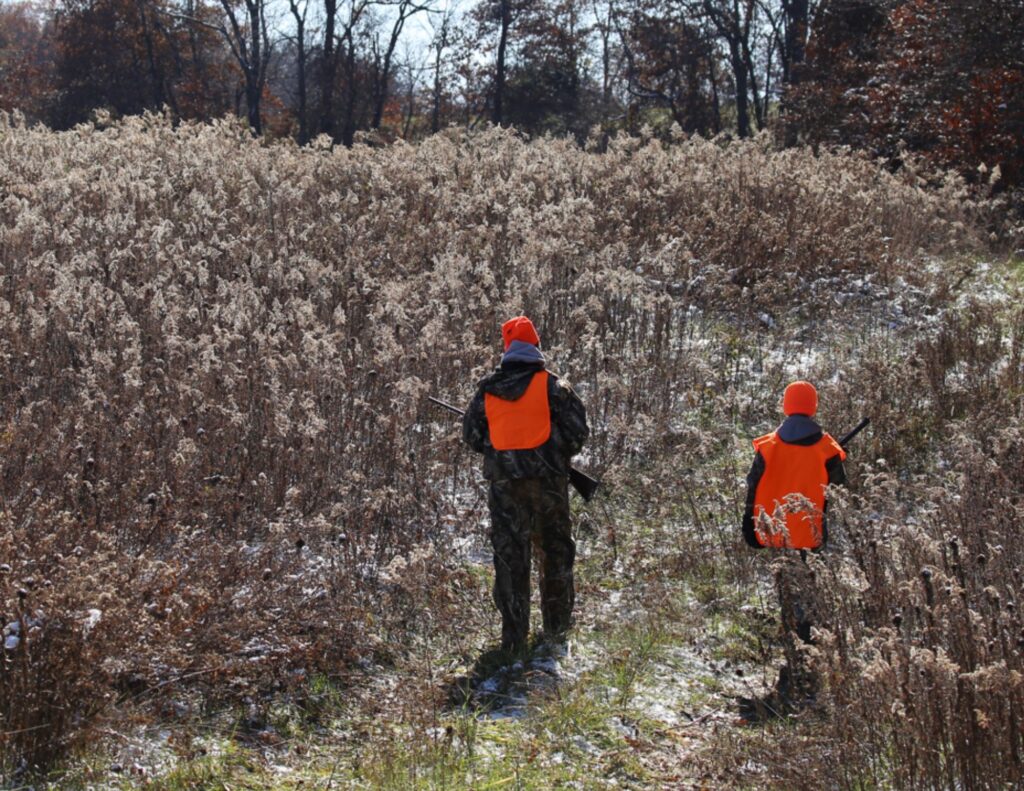 Why It Matters: Our time-honored hunting traditions remain alive and well with today’s hunters, but will rely on the next generation to carry them into the future. In doing so, today’s youth will eventually be license buyers and, in turn, the primary funders of conservation through the “user pays – public benefits” structure that is the American System of Conservation Funding. By supporting legislative efforts geared at introducing today’s youth to hunting, we are proactively protecting our time-honored traditions for future generations.
Highlights:
- In February 2025, Georgia Legislative Sportsmen’s Caucus (Caucus) Co-Chairs Representatives Chas Cannon and Matt Dubnik, among other Caucus members, introduced House Bill 451, which would allow public schools to offer hunter safety education courses in grades six through twelve.
- On the last day of the 2025 legislative session, the hunter safety education course language from HB 451 was included in Senate Bill 148 (SB 148) but fell short of the Sine Die deadline in the Georgia State Senate.
- Fast forward to January 28, 2026, SB 148 received a unanimous agreement vote to the House Changes from 2025 and was subsequently signed into law by Governors Sportsmen’s Caucus Member Governor Brian Kemp on May 5.
Following a two-year effort spearheaded by the Georgia Legislative Sportsmen’s Caucus working closely alongside the Congressional Sportsmen’s Foundation (CSF), students in Georgia will soon have the opportunity to complete a DNR approved hunter safety education course as part of their in-school instruction. CSF worked closely alongside Caucus members to introduce the bill and see it through the entire legislative process. Additionally, CSF spearheaded a coalition letter of support for HB 451/SB 148 where 12 other state and national sporting conservation organizations signed on in support of the effort.
Students stay busy with schoolwork, after school activities like sports, and more that are constantly pulling for their attention. SB 148 will allow students to simultaneously earn school credit while also fulfilling their required hunter safety education certification. The course will provide students with information needed to understand the purpose of hunting, general hunting practices, and conservation ethics shared by all sportsmen and women, while also gaining a more complete understanding and appreciation for all wildlife in Georgia.
CSF and the Caucus worked closely with the Georgia Department of Natural Resources (DNR) to see that the course offered to students would be based on current hunting safety education courses offered by the DNR. The course will also be taught by a DNR certified hunter education instructor.
CSF commends the Caucus for its multi-year effort to see that a solid foundation is laid for the next generation of sportsmen and women to see our time-honored traditions propelled well into the future.
PENNSYLVANIA INTRODUCES LEGISLATION FOR HUNTER & TRAPPER EDUCATION IN SCHOOLS
Article Contact: Kaleigh Leager
 Why It Matters: In the age of technology where many adolescences spend far more time inside than outside, a change is needed to keep current and future generations of sportsmen and women on the landscape. House Bill 2460 (HB 2460) seeks to do just that by developing an age-appropriate hunting and trapping program by the Pennsylvania Department of Education in consultation with the Pennsylvania Game Commission (PGC) for grades 6-12.
Highlights:
- Pennsylvania House Game & Fisheries Committee Chairwoman and Pennsylvania Sportsmen’s Caucus member, Representative Anita Kulik, introduced this vital piece of legislation to protect the deep-rooted sporting heritage in the Commonwealth.
- The Pennsylvania Department of Education and the Pennsylvania Game Commission (PGC) will work together to create an age-appropriate hunting and trapping education program for grades 6-12 that includes firearm safety instruction by July 1, 2027. This legislation would provided each school the model hunter and trapper education for implementation if they so choose.
- The Congressional Sportsmen’s Foundation (CSF) submitted a letter of support for HB 2460, which passed out of the House Game & Fisheries Committee on May 6, 2026 (17- 9) and then for second reading in the House of Representatives that very same day (201-0). This bill is awaiting third and final consideration before it heads to the Senate.
In April of this year, Representative Anita Kulik introduced Houe Bill 2460 that would allow for school entities to offer hunter and trapper education programs no later than July 1, 2027. This legislation would also require the PGC and School Boards to develop an age-appropriate curriculum that is taught by a PGC certified hunter/trapper education instructor to grades 6 through 12.
According to Representative Kulik’s Legislative Memo, she introduced this legislation to, “foster conservation, promote an understanding of wildlife management, and encourage current and future generations to safely participate in Pennsylvania’s rich outdoor heritage, it is crucial that hunting and trapping education be offered in schools. Educating the youth of the Commonwealth in the proper methods and practices associated with these endeavors will produce safe, responsible, knowledgeable, and involved hunters and trappers.”
HB 2460 also outlines that the curriculum provides the proper usage and handling of firearms, the safe cleaning and maintenance of firearms, and goes over the different types of firearms. Additionally, this legislation requires the curriculum to teach safe hunting practices and techniques, as well as the history of wildlife conservation and hunting.
The Congressional Sportsmen’s Foundation (CSF) applauds Representative Kulik for introducing this vital piece of legislation that will help protect the deep-rooted outdoor heritage in Pennsylvania. Students will get an understanding of the history and importance of hunting and trapping and the role they play in conservation and wildlife management as well as how to safely handle firearms.
FINAL LEGISLATIVE SESSIONS ADJOURN IN THE GREAT PLAINS
Article Contact: Jake Gould
 Why it Matters: Legislative sessions in Iowa and Nebraska have adjourned for 2026, closing out the last active sessions in the Great Plains Region. The Congressional Sportsmen’s Foundation was active in both states, working with legislators on introducing, and defeating, legislation that would have impacted sportsmen and women.
Highlights:
- The Congressional Sportsmen’s Foundation (CSF) was active in Iowa and Nebraska in both introducing pro-sportsmen and women legislation and defeating legislation that would have violated the Public Trust Doctrine.
- Iowa Legislative Sportsmen’s Caucus Co-Chair Senator Lynn Evans introduced Senate File 2130, a CSF legislative priority, which would have provided hunting, trapping, or fishing license purchasers the opportunity to register vote.
- CSF opposed Nebraska Legislative Bill 1197, which would have allowed landowners to sell their hunting permits.
Iowa legislators introduced their fair share of sportsmen and women related bills this year, and many were also carried over from the 2025 legislative session. House File 536 (HF 536) and Senate File 1197 (SF 1197) were both CSF legislative priorities introduced during the 2025/2026 legislative session. HF 536 would have created an elective firearm, hunting, and wildlife curriculum for students in grades six through eight that school districts could choose to implement, while SF 2130 would have provided Iowa residents purchasing a hunting, trapping, or fishing license with a voter registration application. Senate Joint Resolution 7, a proposed constitutional amendment for the right to hunt and fish had momentum during the 2025 session but ultimately failed to move in 2026 due to amendments made to the legislation. Though these bills failed to make it across the finish line this session, positive momentum was made to continue these efforts into the next session.
Nebraska also saw legislation that would have negatively impacted the North American Model of Wildlife Conservation. Legislative Bill 1197 would have allowed landowners to sell their limited landowner hunting tags. The ability to transfer these tags would essentially privatize wildlife, which is in direct violation of the Public Trust Doctrine – a longstanding tenet of the North American Model of Wildlife Conservation. Wildlife is managed by state fish and wildlife agencies, like the Nebraska Game and Parks Commission, for the benefit of the public, not for the profit of private individuals. CSF successfully opposed the legislation, and the bill was ultimately defeated.
The Congressional Sportsmen’s Foundation would like to thank the legislators in Iowa and Nebraska for continuing to support sportsmen and women in the Hawkeye and Cornhusker States and will continue to advocate for pro-sporting policies in future legislative sessions.
DEPARTMENT OF THE INTERIOR ANNOUNCES LARGEST EXPANSION OF HUNTING AND FISHING OPPORTUNITIES IN HISTORY
Article Contact: Taylor Schmitz
 Why It Matters: As one of the top reasons why sportsmen and women no longer participate in hunting and fishing, access is critical to carry forward our time-honored outdoor traditions. This expansion across lands and waters managed by the U.S. Fish and Wildlife Service (FWS) recognizes the importance of improving access opportunities for sportsmen and women, which is strongly supported by the Congressional Sportsmen’s Foundation (CSF).
Highlights:
- Earlier today, the Department of the Interior announced a proposal to open or expand more than 1,450 hunting and fishing opportunities across 111 stations covering 32 states within the National Wildlife Refuge System, which marks the largest expansion of hunting and fishing opportunities in the history of FWS.
- The National Wildlife Refuge System (NWRS) is a unique structure of federal public lands as the only network of lands established for the sole purpose of wildlife.
- This announcement further demonstrates the commitments of Department of the Interior Secretary Burgum and FWS Director Nesvik to America’s sportsmen and women.
This morning, the Department of the Interior announced a proposal that will represent the largest expansion of hunting and fishing opportunities in the history of FWS by opening and expanding more than 1,450 opportunities across 111 stations spanning 32 states.
“The Congressional Sportsmen’s Foundation extends our appreciation to Secretary Burgum and Director Nesvik for their commitment to our nation’s hunters and anglers,” said CSF Senior Vice President Taylor Schmitz.“This expansion further recognizes that hunting and fishing are critical to the health of the National Wildlife Refuge System, and we are grateful to see this announcement.”
For more than 100 years, the National Wildlife Refuge System has not only served as critical habitat for fish and wildlife, but it has also provided invaluable access opportunities for hunters and anglers. Between the NWRS and the National Fish Hatchery System, FWS annually supports more than 2.5 million hunting days and almost 8 million fishing days. Once implemented, this proposal will make more than 92 million acres (over 95%) of NWRS lands and waters open to hunting and fishing opportunities.
CSF again thanks Secretary Burgum and Director Nesvik for announcing the largest expansion of hunting and fishing opportunities within the National Wildlife Refuge System.
MARYLAND CONTINUES TO CHIP AWAY AT SUNDAY HUNTING PROHIBITIONS
Article Contact: Kaleigh Leager
 Why It Matters: Sunday hunting bans are one of the last remaining examples of the puritanical and antiquated laws that were initially designed to encourage church attendance. At the time when blue law restrictions were first put in place, other activities that were illegal on a Sunday included opening a store for business, drinking alcoholic beverages, and tilling your fields. Access is a major limiting factor hindering participation in hunting, and restrictions on Sunday hunting provide a temporal-access barrier to youth and others that work or attend school throughout the week and are often involved in extra-curricular activities on Saturdays. Maryland’s House Bill 1063 has helped further chip away at these restrictions.
Highlights:
- NASC Executive Council Secretary and Maryland Legislative Sportsmen’s Caucus Co-Chair, Sen. Jack Bailey was the Co-Sponsor of this legislation in the Senate (Senate Bill 643). However, ultimately House Bill 1063 (HB 1063) sponsored by Maryland Legislative Sportsmen’s Caucus member, Del. Regina Boyce, was the final version that was passed and enacted.
- The original version of this legislation included removing the longstanding legislative prohibition on hunting migratory game birds on Sundays, which passed favorably out of the House Environment and Transportation Committee (17 to 3) but was ultimately amended out of the bill on the House Floor by a few Delegates from the Eastern Shore.
- The final version of this legislation expanded hunting hours on Sundays in counties that currently require an end time of 10:30am, removed the time restriction for Wicomico County, and now permits bow hunting for deer during the regulated deer season(s) in Baltimore City.
Maryland currently allows a wide variety of Sunday hunting opportunities, but they consist of a very confusing patchwork of regulations that are determined on a county-by-county basis as well as game species. This continues to be a barrier for sportsmen and women, but House Bill 1063 (HB 1063) helped in providing some additional opportunities by rolling back another piece of this overly complicated puzzle.
Unfortunately, false claims regarding negative impacts to waterfowl populations trumped the documented experiences of other states that allow Sunday waterfowl hunting and the Sunday migratory game bird hunting provision was ultimately amended out of the bill prior to final passage.
From CSF’s perspective, the appropriate fix for this convoluted monstrosity of hunting regulations (88 lines of statute on Sunday Hunting alone) would be to remove the legislative prohibition all together, similar to what Pennsylvania did in 2025, and give full regulatory authority over hunting season dates and bag limits to the Maryland Department of Natural Resources (DNR) like they currently have for the other 6 days of the week (Monday – Saturday).
The Congressional Sportsmen’s Foundation (CSF) applauds both bill sponsors for their tireless efforts throughout this entire legislative process and congratulates Delegate Regina Boyce on the final passage and enactment of this important piece of legislation. We look forward to continuing to fight for access and opportunity for sportsmen and women, and for sound science-based wildlife management in the “Old-Line State”.
GOVERNOR MCMASTER SIGNS CSF PRIORITY HUNTING ACCESS LEGISLATION IN SOUTH CAROLINA
Article Contact: Conner Barker
 Why It Matters: Lack of access to quality hunting grounds is a leading barrier to participation for new and seasoned hunters alike. As populations grow and more pressure is put on wild landscapes, the demand for quality access to lands open to hunting has never been greater. Legislative efforts that ensure a no-net-loss of public hunting land are critical in carrying our time-honored traditions into the future.
Highlights:
- In January 2025, former South Carolina Legislative Sportsmen’s Caucus Co-Chair and National Assembly of Sportsmen’s Caucuses (NASC) Executive Council Member Representative Bobby Cox and current Caucus Co-Chair Representative Heather Bauer introduced House Bill 3872 (H3872), which would limit the loss of available acreage open to hunting for South Carolina’s sportsmen and women.
- In February 2025, H3872 passed the South Carolina House of Representatives on a unanimous 110-0 vote followed by another unanimous vote of 43-0 from the South Carolina Senate in April 2026.
- The House of Representatives gave H3872 its final approval following a few minor changes from the Senate on May 6, 2026, and sent the bill to the Governor’s desk.
- Finally, on May 15, 2026, Governors Sportsmen’s Caucus member Governor Henry McMaster signed H3872 into law, officially protecting hunting access on over 290k acres of land.
The Congressional Sportsmen’s Foundation (CSF) is proud to report on an initiative that began as a concept in 2024 and has now been signed into law following a two-year effort in the Palmetto State. CSF worked very closely alongside the bi-partisan leaders of the Caucus from bill introduction to the Governor’s signature to ensure that H3872 became law – a huge win for all of South Carolina’s sportsmen and women.
South Carolina ranks among the fastest growing states in the country in population. People are realizing the many benefits of southern living in a state like South Carolina, which has plenty to offer when it comes to outdoor recreation – hunting included. Thus, there may not be a more fitting state in the country to enact legislation that will protect access to public hunting grounds for generations to come.
Dubbed the “Hunting Heritage Protection Act,” H3872 will require that, to the greatest practical extent, decisions made by the South Carolina Department of Natural Resources (SCDNR) must not result in any net loss of land acreage available for hunting on wildlife management areas owned by the state, which will apply to approximately 293,000 acres in the Palmetto State. H3872 also requires the SCDNR to submit annual reports to the Senate Fish, Game and Forestry Committee and the House Agriculture, Natural Resources and Environmental Affairs Committees detailing the acreage available for hunting opportunities on WMAs owned by the SCDNR. The report must also describe any efforts made by the SCDNR to offset the loss of hunting opportunities, if any, on SCDNR owned WMAs.
CSF commends the Caucus for working closely alongside CSF over the past two years to put a bow on this much-needed legislative effort in South Carolina. While South Carolina may be small compared to its southern companions, its diverse public land hunting opportunities remain vast and protected well into the future.
NEW LEGISLATION BUILDS ON GAOA SUCCESS WHILE EXPANDING OUTDOOR RECREATION OPPORTUNITIES
Washington, DC – June 10, 2026 – Moments ago, the leaders of the House Natural Resources Committee, Chairman Bruce Westerman, Co-Chair of the Congressional Sportsmen’s Caucus (CSC), and CSC Member and Ranking Member Huffman, introduced the bipartisan Great American Outdoors Act 250, reauthorizing a 2020 landmark public lands bill that is a top priority for the Congressional Sportsmen’s Foundation (CSF).
The Great American Outdoors Act 250 seeks to reauthorize the Legacy Restoration Fund (LRF), which was a top CSF priority in the 2020 Great American Outdoors Act that, in part, provided $9.5 billion over five years to address the deferred maintenance backlog on federal public lands. While our uniquely American network of federal public lands is a treasure to all of us, these lands and waters continue to face a significant headwind of deferred infrastructure maintenance across roads, bridges, trails, campgrounds, etc., which can result in a reduction in access for sportsmen and women. This legislation will provide our federal land management agencies with much-needed financial resources to restore the deferred maintenance infrastructure across federal public lands.
“CSF extends our strong appreciation to Chairman Westerman and Ranking Member Huffman for introducing the Great American Outdoors Act 250,” said CSF Senior Vice President Taylor Schmitz. “As America celebrates its 250th Anniversary, it is important to reflect on what makes America unique, and in part, that is our network of federal public lands. This legislation renews and enhances our commitment to the legacy of our public lands.”
CSF is particularly excited to see the inclusion of language that establishes a pilot program for outdoor recreation and sportsmen’s access. Specifically, the pilot program allows up to 15% of funding made available for the U.S. Fish and Wildlife Service (FWS), Bureau of Land Management (BLM), and the U.S. Forest Service (USFS) to be allocated to support outdoor recreation projects, sportsmen’s access projects, including improving habitat for hunting and fishing.
CSF also appreciates the inclusion of language that increases the limit of the percentage of funding that can be spent on non-transportation projects. The FWS is inherently unique amongst our network of federal public lands as the National Wildlife Refuge and National Fish Hatchery Systems are dedicated to fish and wildlife conservation rather than protecting historical sites, scenery and landscapes, or multiple-use mandates like the National Park Service, BLM, and USFS.
More than a simple reauthorization of the Great American Outdoors Act, this bill transforms the program from a deferred-maintenance initiative into a broader public lands modernization, recreational access, and partnership program, with sportsmen’s access explicitly included as a funding priority.
CSF looks forward to working with Chairman Westerman and Ranking Member Huffman to see the Great American Outdoors Act 250 become law as we celebrate America’s 250th.
FACT AND FICTION ON OREGON IP28
Article Contact: Marie Neumiller
 Why It Matters: As signatures for Oregon’s Initiative Petition 28 (The PEACE ACT) surpass 126,000 and the measure inches closer to the November 2026 ballot, sportsmen and women must understand its real-world consequences. Proponents’ claims paint a simplistic picture of humane wildlife management, but the reality involves devastating impacts on native species, agricultural lands, and the funding that sustains Oregon’s conservation programs. IP-28 would handcuff the Oregon Department of Fish and Wildlife (ODFW) by removing critical management tools, ultimately harming the very wildlife it claims to protect.
Highlights:
- Proponents’ suggestions that pest control and wildlife management be conducted utilizing “humane, non-lethal traps,” contraceptive vaccinations, and relocation ignore the proven risks of invasive species within an ecosystem.
- Claims that federal grants would remain untouched overlook the functions and requirements within the American System of Conservation Funding.
- The Congressional Sportsmen’s Foundation (CSF) is continuing our mission to share the truth about the North American Model of Wildlife Conservation and the conservation contributions made by sportsmen and women.
Based on the latest Secretary of State submission log, proponents have now returned 126,000 unverified signatures on behalf of the PEACE ACT (People for the Elimination of Animal Cruelty Exemptions), also known as IP-28. To make the November ballot, proponents will need 117,173 validated signatures. On average (based off the last four qualified OR initiatives) approximately 21% of signatures fail the validation process. So, the measure is not guaranteed to appear on the November 2026 ballot at this point. That being said, as the ballot initiative moves closer to the November 2026 ballot, it is time to take a serious look at the implications of this measure and correct some of the misleading claims made by its proponents. While framed as an animal cruelty prevention effort, IP-28 would eliminate longstanding exemptions in Oregon law, effectively criminalizing essential wildlife management practices, hunting, fishing, trapping, and even certain agricultural and pest control activities. This would leave ODFW without vital tools needed to protect native species, manage conflicts, and maintain healthy ecosystems.
One such example of ecosystem risk through IP-28 is pest control in homes. Proponents claim that mice and rats could be humanely trapped, given contraceptives, and relocated. Sadly, reality is rarely that simplistic, especially with wildlife management. If city rats and mice were trapped en masse in urban settings and relocated to agricultural lands or wildlife habitats, they could add substantially to existing populations and create more competition for resources. An existing example of extensive damage caused by rapidly reproducing populations is demonstrated with non-native nutria in Oregon. According to ODFW, nutria are aggressive competitors with the smaller native muskrat, which has been largely eliminated or greatly reduced in areas where nutria have been established. Nutria burrows cause considerable stream bed erosion, damaging banks, dikes, and infrastructure, which can also impact spawning areas for threatened, native salmon populations. Additionally, nutria depredate on many human food crops like wheat, corn, sugar, and more while also girdling trees and impacting natural plant communities. Handcuffing ODFW’s wildlife management of any species through IP-28 is not a kindness to wildlife; in fact, it would prove inhumane to native species and erode Oregon’s biodiversity. Even Oregon Metro recognizes that lethal removal is a necessary tool for protecting ecosystems and benefiting conservation efforts.
Proponents have also claimed that while ODFW would lose hunting and fishing license revenue, IP-28 would not impact the $213.5 million that ODFW receives each year in federal funds, thereby allowing them to continue their conservation projects. This represents a misunderstanding in part regarding the American System of Conservation Funding. In 2025, ODFW received $93.3 million from sportsmen’s dollars which included Federal Pitman-Robertson and Dingell-Johnson funds which are apportioned to states based largely on the number of hunting and fishing licenses sold. These user-pays, public-benefits programs rely on the participation of sportsmen and women. Eliminating license sales would jeopardize Oregon’s eligibility and funding levels for these critical grants, which support habitat restoration, species management, and conservation projects far beyond game species. Without this stable funding tied to our traditions, Oregon’s wildlife programs would face severe shortfalls.
Hunters, anglers, trappers, shooting sports enthusiasts, and ranchers have long been the backbone of conservation in Oregon through their license dollars, excise taxes, and on-the-ground stewardship. IP-28 threatens to undermine this proven model.
As the deadline for signature verification approaches, the Congressional Sportsmen’s Foundation will continue our efforts to educate Oregon voters on the benefits of sportsmen-led conservation through the North American Model of Wildlife Conservation – ensuring that the sporting-conservation community’s voices are heard and protecting Oregon’s hunting, fishing, and trapping heritage for future generations.
DELAWARE REPEALS FINAL LEGISLATIVE SUNDAY HUNTING PROHIBITION AND MORE!
Article Contact: Kaleigh Leager
 Why It Matters: Delaware may be the second-smallest state in the U.S. by land area, but continues to be a leader in sportsmen and women’s issues. Delaware Legislative Sportsmen’s Caucus (Caucus)-led House Bill 278 (HB 278) or known as the “Omnibus Sportsmen’s Package” repealed the last remaining legislatively prohibited game species for Sunday hunting (small game) and provided the Department of Natural Resources and Environmental Control’s (DNREC) Division of Fish and Wildlife (Division) with more options when it comes to regulating hunting implements and pistol caliber rifles.
Highlights:
- HB 278, sponsored by all 4 Co-Chairs of the Caucus, was signed into law by Governors Sportsmen’s Caucus member, Governor Matt Meyer, on Wednesday, June 10th, 2026. The enactment of this legislation provided much-needed legislative repeals and updates to Delaware’s hunting statutes.
- This legislation removed the last standing legislative prohibition on Sunday hunting in the First State by removing small game from the list of prohibited species that may be lawfully hunted on Sundays.
- The legislative prohibition on smokeless powder for muzzleloaders was also repealed, which allows the Division to potentially implement the use of FireStick-compatible muzzleloaders and airbows.
- This legislation also clarifies and updates what calibers may be used for straight wall cartridge hunting (greater than .30 cal).
- The Congressional Sportsmen’s Foundation (CSF) testified in person in favor of this legislation in addition to providing written testimony.
The “Omnibus Sportsmen’s Package” included several provisions relating to hunting in the First State. One of the most notable of them all, is the removal of the remaining legislative prohibition on Sunday hunting, which covers small game animals. Additionally, the legislation allows for the update of approved straight wall cartridge calibers and the potential for new hunting implements.
Over the past decade, Delaware has continued to repeal its archaic and longstanding Sunday hunting prohibitions. For example, as previously reported in 2024, Delaware repealed the prohibition on Sunday game bird hunting. Prior to that, in 2016, the Caucus spearheaded the passage of HB 289, which permitted deer hunting on both private and public lands (subject to approval of the appropriate regulatory body) on five Sundays during firearms seasons. Two years later, in 2018, Delaware took things further by passing SB 198, which allowed hunting every Sunday throughout the state’s archery and deer season.
HB 278 provides the Division with the ability to review and make potential regulation changes based on current and advancing technology when it comes to hunting implements and ethical means of harvest via projectile weapons. As advances in technology continue, it is important that legislators work alongside their state fish and wildlife agencies, just like the Delaware Legislative Sportsmen’s Caucus and the DNREC Division of Fish and Wildlife did, to ensure that the laws and regulations related to new technologies are clearly stated and easily understood by sportsmen and women.
The Congressional Sportsmen’s Foundation applauds the Delaware Legislative Sportsmen’s Caucus for continuing to champion pro-sportsmen and women’s legislation. Additionally, CSF thanks Governors Sportsmen’s Caucus member, Governor Matt Meyer, for signing this legislation into law and supporting the First State’s hunters.
SHARE ON

You may also like

The role corn plays for gamebirds and economies ac...
Sportsmen’s conservation policy issues from publ...
Sportsmen’s conservation policy issues from publ...