













Policy Corner Brief: APRIL 2026

HUNTING ACCESS BILL CLEARS TENNESSEE GENERAL ASSEMBLY
Article Contact: Conner Barker
 Why It Matters: As hunting participation has generally been on the decline in recent years, access to quality hunting ground is often cited as a leading barrier to hunting participation. These challenges can be exacerbated when access and opportunity are governed by conflicting rules established by multiple agencies, causing confusion among would-be participants. Efforts to codify the state’s fish and wildlife agency as the sole rulemaking and enforcement authority when it comes to wildlife management, as opposed to a patchwork of local government ordinances, will clarify questions surrounding access to otherwise legal hunting grounds and should remain a top priority for lawmakers and sportsmen and women alike.
Highlights:
- Tennessee House Bill 2017 (HB 2017) and Senate Bill 2028 (SB 2028), sponsored by Tennessee Legislative Sportsmen’s Caucus (Caucus) member Senator Adam Lowe and Representative Mark Cochran, both introduced in January, will prohibit local governments from regulating the manner and means of taking wildlife, including the lawful discharge of a firearm.
- Both HB 2017 and SB 2028 passed the Tennessee General Assembly earlier this month and are now awaiting signature from Governors Sportsmen’s Caucus member Governor Bill Lee.
- The Congressional Sportsmen’s Foundation (CSF) submitted written testimony in support.
For decades, the Tennessee Wildlife Resources Agency (TWRA) and its rulemaking body, the Tennessee Fish & Wildlife Commission, have been the state’s authority when it comes to regulating and enforcing hunting laws in the Volunteer State. Only pending a signature from Governor Lee, HB 2017/SB 2028 would further emphasize TWRA’s authority as the manager of Tennessee’s fish and wildlife resources.
It is well understood that the TWRA has sole management authority when it comes to regulating hunting in the state. Following specific instances in Tennessee where local governments have tried to restrict otherwise lawful hunting activities in city limits, affirming that this management authority remains with the TWRA is more important now than ever. A patchwork of laws that vary from county to county would only cause confusion among law-abiding hunters and potentially discourage hunter participation. Additionally, through both the Tennessee State Constitution and laws enacted by the General Assembly, Tennesseans should remain free from burdensome local laws and ordinances that may infringe on their ability to enjoy our time-honored traditions.
Moreover, under current law, Tennessee already has robust firearm preemption laws. With a strong precedent already in place protecting law-abiding firearm owners, it only makes sense to extend this same standard to those engaged in lawful hunting activities. Tennessee is also one of 24 states that has the right to hunt and fish enshrined in their constitution, which ensures Tennesseans have the personal right to hunt and fish, subject to reasonable regulations and restrictions prescribed by state law. It is also worth noting that HB 2017/SB 2028 would not alter existing discharge distance restrictions put in place by the state, nor would it prevent local governments from enforcing existing criminal laws.
CSF commends the Caucus and the General Assembly for their work and leadership when it comes to protecting our time-honored traditions from burdensome and conflicting local laws that would impede law-abiding Tennesseans.
SOUTH DAKOTA LEGISLATIVE SESSION COMES TO A CLOSE
Article Contact: Jake Gould
 Why It Matters: The South Dakota legislative session came to a close in early March. Legislators in the Mount Rushmore State introduced their fair share of legislation that would have had an impact on sportsmen and women. With the close of the session, legislators were successful in passing suppressor clarification legislation, a legislative priority for the Congressional Sportsmen’s Foundation (CSF).
Highlights:
- The South Dakota Legislative Session came to an end on March 9, and Governor Rhoden has until April 30 to sign or veto any legislation still in consideration.
- The Congressional Sportsmen’s Foundation actively engaged on legislation that would have impacted sportsmen and women.
- South Dakota Senate Bill 2 (SB 2) passed both the House and Senate unanimously and was signed into law by Governors Sportsmen’s Caucus member Governor Rhoden.
The Congressional Sportsmen’s Foundation was active during South Dakota’s legislative session, engaging on legislation to clarify state statutes on suppressors, a CSF priority, which ultimately passed. CSF also supported legislation that would have allowed hunters to use drones to assist in the recovery of deer and elk (but not for hunting or scouting), and legislation that would have prohibited financial institutions from taking discriminatory actions against individuals or businesses participating in lawful economic activities, of primary importance to the firearms industry.
South Dakota Senate Bill 2 removed suppressors from South Dakota’s definition of a controlled weapon, an effort CSF has been working on in several states this year. SB 2 passed through both Chambers unanimously and was signed into law in under a month. With the bill being signed into law, it reconciles any potential issues with the state statute that may arise if suppressors are removed from the National Firearms Act. CSF Board Treasurer, Brandon Maddox, Founder and CEO of Silencer Central, championed the effort in his home state.
CSF also provided testimony in support of House Bill 1224 (HB 1224) and Senate Bill 201 (SB 201), though both bills failed to gain any momentum before the session ended. HB 1224 would have prohibited financial institutions from taking discriminatory actions against individuals or businesses participating in lawful economic activities, including businesses involved in the lawful commerce of firearms, components, and ammunition. SB 201 would have allowed hunters to use drones for recovery purposes of harvested or mortally wounded deer and elk.
The Congressional Sportsmen’s Foundation would like to thank the South Dakota Legislative Sportsmen’s Caucus and Governor Larry Rhoden for promoting positive legislation for sportsmen and women in the Mount Rushmore State.
CSF PRIORITY HUNTING ACCESS LEGISLATION MOVES FORWARD IN SOUTH CAROLINA
Article Contact: Conner Barker
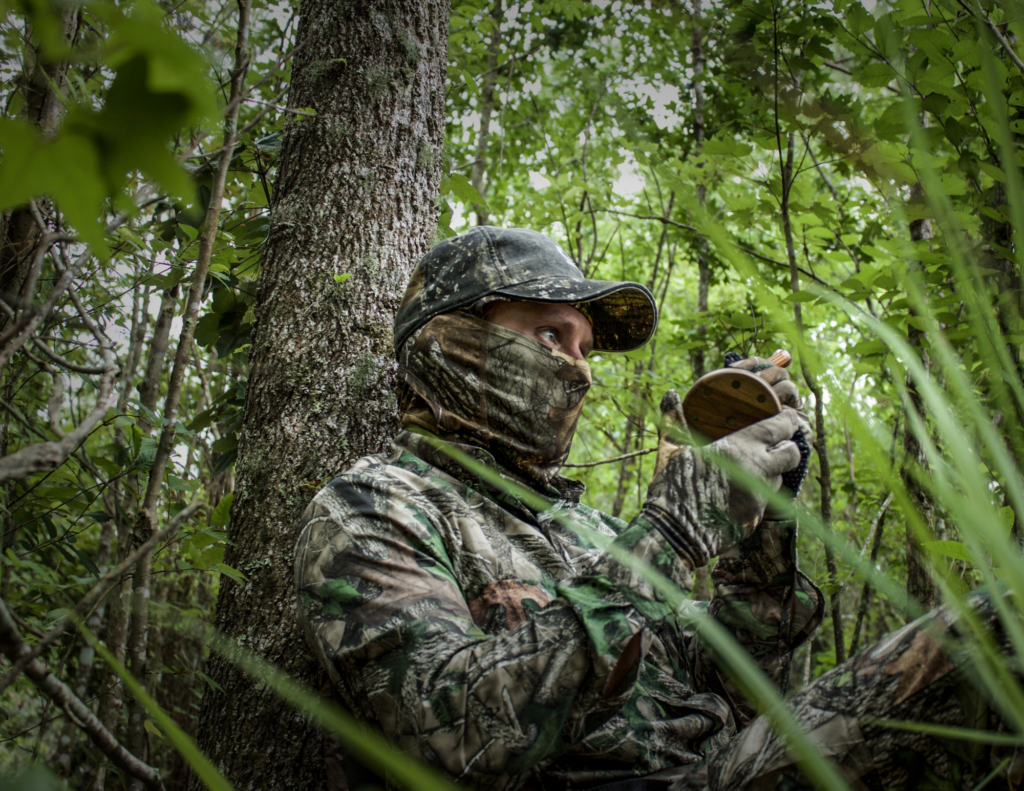 Why It Matters: South Carolina, like many other southern coastal states, continues to see dramatic increases in new residents. Protecting access to quality public land hunting areas should be top of mind for policy makers in South Carolina, especially as populations increase and private land hunting opportunities become harder to come by. Efforts to establish a no net loss of public hunting acreage in South Carolina will protect the ability of sportsmen and women to enjoy our time-honored traditions.
Highlights:
- In January 2025, former South Carolina Legislative Sportsmen’s Caucus (Caucus) Co-Chair and National Assembly of Sportsmen’s Caucuses (NASC) Executive Council Member Representative Bobby Cox and current Caucus Co-Chair Representative Heather Bauer introduced House Bill 3872 (H3872), which would limit the loss of available acreage open to hunting for South Carolina’s sportsmen and women.
- In February 2025, H3872 cleared the South Carolina House of Representatives on a unanimous 110-0 vote.
- On April 1, 2026, H3872 cleared the Senate Fish, Game and Forestry Committee unanimously, as amended, and will now head to the Senate floor for a vote.
- The Congressional Sportsmen’s Foundation (CSF) has been spearheading this legislation alongside the South Carolina Leigslative Sportsmen’s Caucus since inception and recently produced a coalition letter of support alongside 16 other national and in-state partners.
In many states, a bill’s life may stretch over multiple years or legislative sessions. In the case of H3872, it has been an effort that began in early 2025 and continues well into 2026 as part of the biennium, or two-year session in South Carolina. One commonality throughout the process is efforts from the Caucus and CSF to see this measure through to the finish line, hopefully later this month.
H3872 cleared the Senate Fish, Game and Forestry Committee unanimously on April 1. This marks yet another legislative hurdle that the bill has cleared, again without receiving a single “no” vote. This broad show of support highlights the importance and wide acceptance associated with protecting hunting access on public lands. South Carolina looks to join other southeastern states like Florida, Georgia, Kentucky, Louisiana, Mississippi, and Tennessee as states that have passed similar legislation to protect public hunting access for the sportsmen and women of their state.
As amended, H3872 would require that, to the greatest practical extent, decisions by the South Carolina Department of Natural Resources (SCDNR) must not result in any net loss of land acreage available for hunting opportunities on wildlife management areas owned by the state, which encompasses approximately 293,000 acres in South Carolina. Additionally, the SCDNR must submit an annual report to the Senate Fish, Game and Forestry Committee and the House Agricultural Natural Resources and Environmental Affairs Committee detailing the acreage available for hunting opportunities on SCDNR owned WMAs and efforts by the SCDNR to offset the loss of hunting opportunities, if any, on SCDNR owned WMAs.
H3872 now awaits a full vote from the Senate. Following passage from the Senate, the bill would then need to be returned to the House for a concurrence vote to agree to the changes made by the Senate. CSF commends the Caucus for their strong leadership on this important initiative and our many partners that have supported the measure. CSF looks forward to seeing H3872 cross the finish line before the 2026 session comes to a close.
TWO CSF PRIORITY BILLS INTRODUCED IN THE SPORTSMAN’S PARADISE
Article Contact: Mark Lance
 Why It Matters: Bringing hunter safety education classes into schools offers kids a chance to learn the fundamentals needed to safely participate and enjoy time outdoors in a controlled, safe, and familiar environment. The experiences that they gain can encourage them to become annual hunting and fishing license holders, where they will join in funding conservation for years to come. Additionally, protecting the private information of license holders gives both new and old hunting and fishing license holders a greater sense of security while they enjoy our shared time-honored traditions.
Highlights:
- On March 23, Louisiana Legislative Sportsmen’s Caucus (Caucus) Member Representative Paul Sawyer introduced HB 1130, which requires public school governing authorities to offer a hunter education course to students in grades 5-12.
- Also on March 23, Caucus Co-Chair and NASC Executive Council Member Representative Jerome Zeringue introduced HB 1177, which would protect the private biographical information of license holders who participate in lotteries conducted by the Louisiana Department of Wildlife and Fisheries.
- The Congressional Sportsmen’s Foundation (CSF) spearheaded the introduction of both pieces of legislation, and they have now been assigned to their first committee stops.
Louisiana is known as the “Sportsman’s Paradise” for good reason. From great duck hunting to world class sportfishing along the coast, there is no shortage of opportunities for sportsmen and women to get afield and on the water in Louisiana. The Louisiana Legislative Sportsmen’s Caucus recognizes the value that outdoor recreation brings to Louisiana and fights every year to protect, advance, and promote the Sportsman’s Paradise.
Exposing young people to the fundamentals of our time-honored traditions is essential in recruiting the next generation of hunters. Having them build an appreciation for our favorite pastimes during a critical developmental period in their lives will encourage them to more fully understand the importance of hunting in wildlife management.
HB 1130 not only requires that public schools offer hunter education in grades 5-12, but also that the State Board of Elementary and Secondary Education consults with the LDWF to implement proper courses. By allowing schools to offer courses in hunting safety education, students will receive the knowledge and experience needed to participate and to continue upholding Louisiana’s moniker as the Sportsman’s Paradise. Upon successful completion of the course, students will be well-equipped to get outdoors and participate in our time-honored traditions, which will hopefully spark a passion that will carry with them for the rest of their lives.
If the spark is lit, they could be further incentivized to continue their participation knowing that their personal information is protected if they decide to participate in lottery draw hunts conducted by the LDWF.
When applying for a license, whether through a lottery system or otherwise, individuals must provide accurate private biographical information. These individuals often believe that their information will only be seen by the receiving fish and game department. However, many states require this information to be published and/or open to the public upon request, resulting in a substantial lack of privacy protection for sportsmen and women. Currently, Louisiana lacks a safeguard for this sensitive information, which HB 1177 intends to correct.
CSF would like to thank Representative Sawyer and Representative Zeringue for their leadership in advancing both HB 1130 and HB 1177, and we will continue to support both efforts as they move through the legislative process.
SHARE ON

You may also like

The role corn plays for gamebirds and economies ac...
Sportsmen’s conservation policy issues from publ...
Sportsmen’s conservation policy issues from publ...