












Policy Corner Brief: MARCH 2026
INDIANA NATURAL RESOURCES COMMISSION SPARED THE AXE IN GOVERNMENT EFFICIENCY BATTLE
Article Contact: Bob Matthews
 Why It Matters: Natural Resources Commissions provide sportsmen and women with a public forum in which they can voice their opinions and concerns and thereby help shape fish and wildlife regulations. Eliminating the Indiana Natural Resource Commission (NRC), as Indiana HB 1003 would have done as originally passed by the House, would have weakened the state’s ability to promulgate well-informed, science-based fish and wildlife rules and regulations.
Highlights:
- The Congressional Sportsmen’s Foundation (CSF) recently reported on a bill in Indiana that would have eliminated the Indiana Natural Resources Commission.
- Indiana HB 1003, which had already passed through the Indiana House of Representatives, would have eliminated or consolidated more than sixty state boards and commissions.
- Alongside in-state and national partners, CSF worked to oppose the bill as written and advocated against including the NRC in the bill.
- Last week, the Indiana Senate Committee on Rules & Legislative Procedure adopted an amendment, removing the NRC from the bill and retaining its existence and rulemaking authority.
As reported earlier this month in The Sportsmen’s Voice, Indiana House Bill 1003 had already passed one legislative chamber and stood to remove the Indiana Natural Resources Commission, the Hoosier State’s fish and wildlife rulemaking authority. The bill aimed to eliminate or consolidate more than sixty boards and commissions in Indiana in an effort to streamline bodies that do duplicative work “or are no longer active at all.”
In-state and national conservation partners rallied together and were successful in conveying to lawmakers that the Indiana NRC squarely does not fall within that category. Regularly scheduled NRC meetings around the state provide Hoosier sportsmen and women, the primary funders of Indiana’s fish and wildlife conservation efforts, a dedicated forum to discuss and provide input on management decisions that directly impact fish and wildlife species, their habitats, and the well-regulated pursuit of those species. By listening to the sporting community and striking the NRC from the list of impacted commissions, Indiana senators recognized the powerful voice that hunters, anglers, and trappers share on the issues that they care about, which is precisely what makes the NRC and its public, open-debate format so effective.
The Congressional Sportsmen’s Foundation will continue to monitor IN HB 1003 as it progresses to the Senate floor and is likely sent back to the House, and will continue to safeguard the voices of hunters, anglers, and trappers and their ability to participate in the political process of crafting the policies and regulations that matter most to their sporting pursuits.
MARYLAND REINTRODUCES “SIN TAX” BILL ON FIREARM AND AMMO PURCHASES
Article Contact: Kaleigh Leager
Why It Matters: Maryland House Bill 197 (HB 197) and its cross-file, Senate Bill 118 (SB 118), seek to impose an additional 11% excise tax on firearms dealers for the sale of firearms, accessories, and ammunition to fund gun violence prevention and intervention programs. Legislation like this discriminates against law-abiding sportsmen and women in the form of a tax (“sin tax”). Firearms and ammunition dealers will likely have to pass the additional cost on to consumers, which is likely to create a decline in sales and, in turn, a decline in conservation funding.
Highlights:
- HB 197 and SB 118 seek to create an 11% excise tax on firearms and ammunition dealers to fund gun violence prevention and intervention programs that will likely be passed down to the consumers
- Legislation like HB 197 and SB 118 will likely negatively impact conservation funding as the sale of firearms and ammunition will likely decrease.
- HB 197 is scheduled for a hearing in the House Ways and Means Committee on March 5, 2026, where CSF will be submitting testimony. This legislation is particularly likely to create a greater hardship on lower-income and minority households, according to Maryland’s Department of Legislative Services Racial Equity Impact Note.
Many legislatures are seeing a renewed effort to pass “sin tax” legislation following California’s passage of a similar provision in Assembly Bill 28 (2023) This legislation has been attempted in different variations in previous years. However, this year, the bill specifies that 26% of the funds would be allocated to the Maryland Violence Intervention and Prevention Fund program, 26% to the Center for Firearm Violence Prevention and Intervention within the Maryland Department of Health, 20% to the Coordinated Community Supports Partnership, 20% to the Survivors of Homicide Victims Grant Program, 4% to the Maryland Trauma Physician Services Fund, and 4% to the R Adams Cowley Shock Trauma Center and the University of Maryland Medical System. In 1937, the Pittman-Robertson Act redirected previously existing manufacturer-level excise taxes on firearms and ammunition to a dedicated fund to be used specifically for wildlife conservation purposes. Once collected, the taxes are deposited into the Wildlife Restoration Account, which is administered by the United States Fish and Wildlife Service (USFWS). Under the Pittman-Robertson Act and per the Firearms and Ammunition Excise Tax, firearms and ammunition are subject to a 10-11% excise tax.
By subjecting federally licensed firearms dealers and subsequently purchasers of firearms to an additional 11% tax, HB 197 will likely negatively impact conservation funding, ultimately making it more challenging for the Maryland Department of Natural Resources to effectively carry out its mission. Arguably, the parties most significantly harmed by this bill will be the recreational shooters and hunters who will be subjected to additional taxes, but all citizens will be negatively impacted by the loss of conservation dollars. Not only would this legislation likely negatively impact conservation funding, but its impacts will be felt most significantly by those in lower-income households.
According to the Maryland Department of Legislative Services Racial Equity Impact Note, “Evidence from government and academic sources suggests that the excise tax imposed by the bill would be passed on to consumers in whole or in part. As such, the tax may disproportionately affect lower-income households and, by extension, communities of color to the extent the tax is passed on to consumers. Any equity benefits realized from programs receiving funding from the tax are indirect and may not offset the more immediate effects of the tax…” The Congressional Sportsmen’s Foundation (CSF) continues to work with the Maryland Legislative Sportsmen’s Caucus to discourage the passage of HB 197 and SB 118, which discriminate against sportsmen and women and will likely negatively impact conservation funding in the “Old Line State.”
GEORGIA LEGISLATIVE SPORTSMEN’S CAUCUS LEADS EFFORT TO FACILITATE PRESCRIBED BURNING
Article Contact: John Culclasure
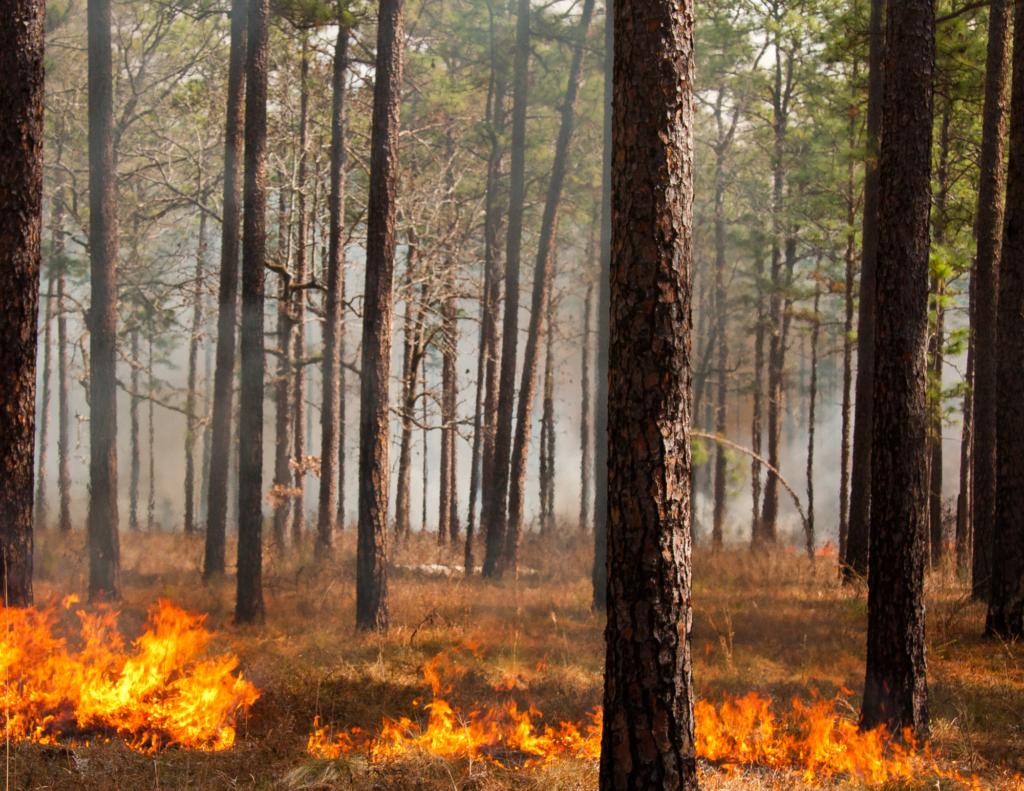 Why It Matters: Prescribed burning enhances wildlife habitat, improves forest health, and reduces wildfire risk. Reducing regulatory barriers to prescribed burning provides clarity for the state, local governments, and the public, while reducing inefficiencies and risks for prescribed burners and landowners. From the Blue Ridge Mountains to the Coastal Plain, Georgia’s forest resources and wildlife will benefit from increasing the use of prescribed fire on the landscape.
Highlights:
- On January 15, Georgia Legislative Sportsmen’s Caucus (Caucus) Co-Chair and NASC Executive Council member Representative Chas Cannon, alongside Caucus members Representatives Leesa Hagan, Steven Meeks, and James Burchett, introduced House Bill 983to clarify that no county or municipality can regulate prescribed burning for silvicultural purposes except for notice or permit requirements.
- On February 12, the House of Representatives unanimously (162-0) passed the legislation.
- On February 20, the Congressional Sportsmen’s Foundation (CSF) submitted a letter of support to the Senate Committee on Natural Resources and the Environment, where it is pending action.
Georgia’s forests and wildlife evolved with fire, and today prescribed fire is a critical tool for managing the state’s fire-adapted forests. The current regulatory framework between the state and local governments, however, limits the use of prescribed fire. House Bill 983 would simplify regulatory oversight by prohibiting counties and municipalities from restricting prescribed burning for silvicultural purposes while reserving local authority for notice or permitting requirements.
CSF’s letter stated, “House Bill 983 ensures regulatory certainty by eliminating the patchwork of local government regulations that restrict prescribed burning in favor of a uniform statewide approach, while striking a balance for local public interests through retained oversight mechanisms. Specifically, the legislation provides that the State of Georgia preempts the field of prescribed burning regulation for silvicultural purposes, except for county or municipality notice or permit requirements by law, ordinance, resolution, or regulation that do not restrict prescribed burning. The State of Georgia and the Georgia Forestry Commission are the appropriate regulatory bodies for prescribed burning management, not local governments.”
CSF appreciates the leadership of Caucus Co-Chair Representative Chas Cannon and his Caucus colleagues on this important issue for Georgia’s sporting-conservation community. The legislation dovetails with the shared stewardship agreement that the State of Georgia recently signed with the U.S. Forest Service and the Natural Resources Conservation Service to accelerate active forest management. CSF is excited to see legislation signed into law to expand prescribed fire use on private and public lands to support Georgia’s wildlife and sporting traditions.
WEST VIRGINIA LEGISLATIVE SPORTSMEN’S CAUCUS LIGHTS THE WAY FOR MORE PRESCRIBED BURNING
Article Contact: John Culclasure
Why It Matters: By reducing barriers limiting prescribed burning on private property in a state that is more than 83% privately owned, Senate Bill 886 will have a significant impact on wildlife habitat in West Virginia. Whether burning to reduce wildfire risk or to enhance habitat diversity, popular game species, including wild turkey, White-tailed deer, and black bear, as well as nongame species that require early successional habitats like the golden-winged warbler, will benefit from increased use of prescribed fire across the landscape.
Highlights:
- On February 9, West Virginia Legislative Sportsmen’s Caucus (Caucus) Co-Chair Senator Bill Hamilton introduced Senate Bill 886 to promote prescribed burning on private property.
- On February 23, the Congressional Sportsmen’s Foundation (CSF) submitted a letter of support to the Senate President.
- On February 23, the West Virginia Senate unanimously (33-0) passed the legislation. The bill was assigned to the House Committee on Government, where it awaits action.
West Virginia’s current statutory framework is not conducive to conducting prescribed burns on private property. Senate Bill 886 seeks to address these limitations by expanding the definition of prescribed fire to include private property, creating rulemaking authority for the Director of the West Virginia Division of Natural Resources for prescribed fire control on private property, and establishing liability protections for certified prescribed fire managers conducting controlled burns in compliance with the statutory requirements designed to ensure that prescribed burns are conducted safely by experienced professionals.
CSF’s letter emphasized the need to provide clarity in liability standards: “The current uncertain liability standard for certified prescribed fire managers discourages the use of prescribed fire. Senate Bill 886 balances private property rights and public safety by establishing a simple negligence standard for certified prescribed fire managers conducting prescribed burns in accordance with the statutory guidelines. Senate Bill 886 makes prescribed burning safer for landowners and the public while providing clarity for certified prescribed fire managers.”
CSF thanks Caucus Co-Chair Senator Hamilton for leading the charge on this important issue for West Virginia’s sportsmen and women and hopes to see the legislation signed into law to expand prescribed burning on private property to support wildlife and hunting traditions in the Mountain State.
BILL TO ESTABLISH 2A SALES TAX HOLIDAY PASSES ALABAMA HOUSE
Article Contact: Mark Lance
Why It Matters: Outdoor sporting goods tax holidays offer sportsmen and women an opportunity to purchase the equipment they need tax-free, while at the same time benefiting conservation programs through increasing sales of firearms, ammunition, and other items that are subject to federal excise taxes.
Highlights:
- On January 29, HB 360 was introduced by Alabama Legislative Sportsmen’s Caucus (Caucus) Member Chris Sells and co-sponsored by Caucus Co-Chair Representative Danny Crawford. HB 360 would create a 2nd Amendment Sales Tax Holiday to occur annually on the last weekend in August, during which the gross proceeds from the sale of ammunition, firearms, and hunting supplies are exempt from state sales and use tax.
- On February 17, the Congressional Sportsmen’s Foundation (CSF) submitted a letter in support of HB 360 to the Alabama House of Representatives.
- HB 360 cruised through the House Ways and Means Education Committee, and on February 24, passed the Alabama House of Representatives 73 to 29.
In a time of seemingly ever-increasing inflation, many Americans are limited on disposable income that could go towards the time-honored outdoor pastimes that we all enjoy and that pay into conservation. Providing Alabamians with the opportunity to purchase firearms, ammunition, and other hunting supplies free from state sales tax allows them the opportunity to do just that, while keeping some money in their pocket to go towards other necessities.
CSF’s letter stated: “Outdoor sporting goods tax holidays offer sportsmen and women an opportunity to purchase necessary equipment tax free while at the same time benefiting conservation programs through increasing sales of firearms, ammunition, and other items which would continue to be subject to manufacturer-level federal excise taxes. The Federal Aid in Wildlife Restoration Act (Pittman-Robertson Act) set up a system in which excise taxes collected from sporting goods purchases are funneled back into conservation. These excise taxes are used to fund a wide variety of activities including wildlife research, private and public habitat management, hunter education, shooting range development, land acquisition and easements, and much more.”
These holidays benefit distributors and purchasers of firearms, ammunition, and other outdoor sporting goods, but they have also made it easier for sportsmen to purchase the hunting and fishing equipment they need. If Alabama were to successfully enact HB 360, it would join other neighboring states like Mississippi and Florida to implement a similar outdoor sales tax holiday. The Congressional Sportsmen’s Foundation will continue to work with the Alabama Legislative Sportsmen’s Caucus to support HB 360 as it heads to the Senate.
MULTIPLE CSF PRIORITIES ADVANCE IN TENNESSEE
Article Contact: Conner Barker
Why It Matters: Whether it’s the funding of conservation today or enabling the next generation of sporting license buyers, there are bills moving through the Tennessee General Assembly that would benefit the sporting-conservation community both short and long-term. Hunters and anglers generate the vast majority of state-level conservation funding through the “user pays – public benefits” structure that is the American System of Conservation Funding (ASCF). However, as costs increase due to inflation and license fees remain relatively stagnant, alternative funding measures may need to be considered. Additionally, teaching our time-honored traditions to students at a young age would prove beneficial to conservation funding and today’s youth alike.
Highlights:
- Tennessee Senate Bill 2369 (SB 2369) and House Bill 2588 (HB 2588), sponsored by Tennessee Legislative Sportsmen’s Caucus (Caucus) Co-Chairs Senator Paul Rose and Representative Chris Todd, would allow schools to offer students in grades 5–12 a hunter education course as part of the student’s physical education, health, or safety instruction curriculum.
- Last week, both SB 2369 and HB 2588 passed their respective committees and are now with the respective calendar and rules committee in each chamber. The Congressional Sportsmen’s Foundation (CSF) spearheaded a coalition letter of support which aligned 16 other sporting-conservation organizations in support of the effort.
- Tennessee Senate Bill 2183 (SB 2183) and House Bill 2138 (HB 2138), sponsored by Caucus members Senator John Stevens and Representative Pat Marsh, would allocate 10% of the Tennessee Valley Authority’s (TVA) payments in lieu of taxes paid to the state to the wildlife resources fund.
- Last week, SB 2183 passed the Senate Energy, Agriculture, and Natural Resources Committee and HB 2138 passed the House Finance, Ways, and Means Subcommittee.. The Congressional Sportsmen’s Foundation submitted written testimony in support of both pieces of legislation.
As final committee calendars approach, several of CSF’s priorities are advancing through the Tennessee General Assembly. First, HB 2588/SB 2369, CSF’s hunter education in schools policy priority, cleared its respective House and Senate Committees last week. This legislation would give school districts the option to offer a hunter education course for students in grades 5 – 12. The course would be approved by the Tennessee Wildlife Resources Agency (TWRA) and would satisfy the mandatory hunter education requirement needed to hunt in Tennessee while simultaneously allowing students to receive school credit.
Next, SB 2183/HB 2138 would provide a much-needed dedicated stream of conservation funding for the TWRA. This pair of bills would lessen the load on hunters and anglers who have been, and will continue to be, the primary funders of conservation through their purchase of sporting licenses and matching federal funds. The proposal would allocate 10% of the TVA’s payments in lieu of taxes to the wildlife resources fund. It is important to note that this would not increase taxes, license fees, or utility rates for TVA customers.
Both proposals outlined above would benefit all Tennesseans, the state’s booming outdoor economy, and our time-honored traditions for generations to come. CSF looks forward to working with the Caucus and its many partners as both measures continue through the legislative process.
REIMBURSEMENT FOR FREE AND DISCOUNTED LICENSES HEARD IN KANSAS
Article Contact: Jake Gould
Why It Matters: Legislation to ensure Kansas’ state fish and wildlife agency is reimbursed for revenue that is lost from free and discounted licenses was heard in the House Committee on Appropriations. A legislative priority for the Congressional Sportsmen’s Foundation (CSF), reimbursing state fish and wildlife agencies for lost revenue ensures that they continue their conservation efforts. Some state agencies rely solely on sportsmen and sportswomen-generated dollars for their fish and wildlife programs.
Highlights:
- The Congressional Sportsmen’s Foundation provided testimony on a legislative priority bill that was heard in Kansas.
- Kansas House Bill 2543 (HB 2543) would reimburse the Kansas Department of Wildlife and Parks (KDWP) for lost revenue from the legislature’s future issuance of any free or discounted hunting and fishing licenses.
- The bill’s sponsor, Representative Will Carpenter, serves as Co-Chair of the Kansas Legislative Sportsmen’s Caucus.
CSF has been proactive in the Great Plains Region, encouraging states to introduce legislation that protects critical conservation funding, like Kansas House Bill 2543. This piece of legislation, if passed, would ensure the Kansas Department of Wildlife and Parks (KDWP) can continue its conservation efforts, which rely solely on sportsmen and sportswomen-generated dollars.
Thanks to Kansas Legislative Sportsmen’s Caucus Co-Chair Representative Will Carpenter, the bill’s sponsor, HB 2543 was heard on March 11. CSF submitted testimony in support of the bill to the House Committee on Appropriations, highlighting how this legislation would protect KDWP from losing critical conservation funding from free and discounted licenses. HB 2543 upholds the “user pays – public benefits” structure of the American System of Conservation Funding. KDWP relies solely on revenue generated through sportsmen and women for their conservation efforts, which benefit all Kansans. HB 2543 not only ensures that KDWP is reimbursed for lost revenue due to free or discounted licenses but also ensures they are able to collect their share of federal apportionments. in support of the bill to the House Committee on Appropriations, highlighting how this legislation would protect KDWP from losing critical conservation funding from free and discounted licenses. HB 2543 upholds the “user pays – public benefits” structure of the American System of Conservation Funding. KDWP relies solely on revenue generated through sportsmen and women for their conservation efforts, which benefit all Kansans. HB 2543 not only ensures that KDWP is reimbursed for lost revenue due to free or discounted licenses but also ensures they are able to collect their share of federal apportionments.
After the hearing, HB 2543 remains in the House Appropriations Committee where it will wait for the Committees to vote on it at a later hearing. The Congressional Sportsmen’s Foundation will continue to promote and engage on legislation that ensures state fish and wildlife agencies are reimbursed for lost revenue from the issuance of free or discounted hunting and fishing licenses.
SHARE ON

You may also like

The role corn plays for gamebirds and economies ac...
Sportsmen’s conservation policy issues from publ...
Sportsmen’s conservation policy issues from publ...