





Subscribe Today
ADVERTISEMENT

Upland Hunting in Sweden

Upland Hunting in Sweden

Upland Hunting in Sweden

STORY BY
PHOTOGRAPHY BY

Upland Hunting in Sweden

STORY BY
PHOTOGRAPHY BY
‘‘

As we made our way out of the towering aspen and birch trees into our last green field of the day, a covey of partridge and pheasant flushed from the brush at our feet. In an instant, I was taken back to Scotland, the country I traveled to with my ballet company to perform years ago. At age 13, being in a faraway country to perform for strangers was foreign and invigorating all at once. This time, however, I was in Sweden, and it wasn’t me who was dancing but the array of birds in front of me as they flew in every direction, the sound of music replaced by the sound of reed grass blowing in the wind, and the audience of foreign strangers replaced by the lively Labradors and spaniels we were hunting over.

During the course of one day, we hunted pheasant, partridge, and ducks over small ponds and in grassy fields and lush forests. The myriad unknowns of a mixed-bag hunt is exhilarating and unparalleled. Stefan Bengtsson and Sofia Hammarskjöld Bengtsson recounted this as we walked back to the lodge, an ancient castle situated in Southern Sweden, just 30 minutes from Copenhagen. The element of surprise partnered with an appreciation for their home country’s terrain is the reason they do what they do. They may work as a husband-and-wife team of hunters now, but their individual passions for the hunt came long before they knew each other.

Born into a family of hunters, Sofia was 10 years old when her father put her in a blind by herself for the first time. It’s no surprise that a love of shooting and passion for hunting came naturally to her. After graduating from university with a teaching degree and working as a journalist in both radio and print, she found herself drawn back to the fields and forests she had known as a young girl. Abandoning her initial careers to pursue a life of gamekeeping, she attended Swedish hunting school and began working in the hunting business. Her path crossed Stefan’s when he inquired about some of the land she was managing. “We actually met in the forest,” Sofia said. Stefan laughed, and added, “I needed some more hunting grounds.”

Stefan had just returned from Africa where he had started a nature preserve, which afforded him the opportunity to hunt and work on various properties. Traditionally in Sweden, families and estates hire an individual to be their gamekeeper, and that person works on the same property for the rest of his or her life. Stefan was pleasantly surprised that this wasn’t the case in Africa, though. Being a gamekeeper there didn’t confine him to a specific piece of land or family tie. The idea of bringing this new type of hunting experience to his home country excited him, so he returned to Sweden and established his business, Scandinavian Pro Hunters, as a way to share it with others. “When we started it up, people said that we were idiots that we were doing it this way,” Stefan said. Perhaps it was this opposition that fueled the Bengtssons’ fervor for the mixed hunt as they expanded their business into different parts of the country. Their traditional hunting operation with an unconventional twist not only turned out to be a success, but over the years, they have given people from across the globe experiences of a lifetime.

By the time we arrived back at the castle, our conversation had shifted to the uniqueness of upland hunting in Sweden. Stefan explained that one of the reasons he created Scandinavian Pro Hunters was to show that hunting in Sweden is different than upland hunting in places like Great Britain and the United States for an array of reasons. “If you go to England, a normal day of rough shooting would be five to eight birds per gun,” Stefan said. “Here we are shooting up to 20 or 30 birds per gun a day.” On a rough shooting day in Sweden, a group of hunters typically shoot 150 to 200 birds total, and on other days of mixed hunting with more drives, they shoot as many as 300 or 400 birds—much more than they would on different types of hunts.

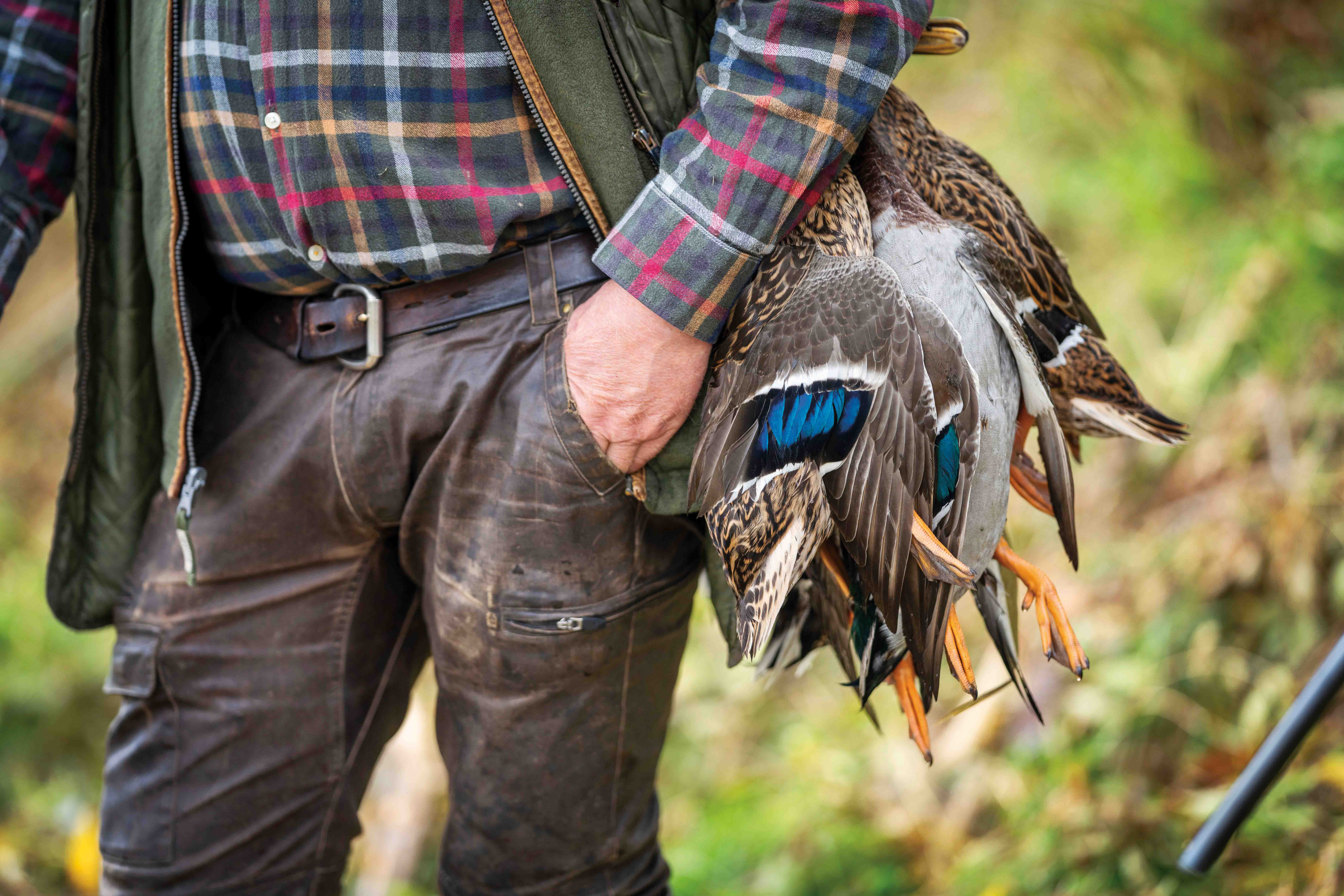
Another difference is that Scandinavian Pro Hunters utilizes a mixed hunt, a combination of walk-up and driven. There might be a drive where every hunter has a peg, and the birds are pushed overhead. Within the next hour, however, the terrain has transformed into an open field that if captured by photograph could be labeled as North Dakota. In this section of the hunt, pheasant, partridge, and ducks are flushed from every direction. Blockers in the distance hold their positions as a variety of birds course through the air. Then, in an instant, the hunters have stumbled upon the bank of a duck pond, where they get to experience an entirely different kind of hunt. It’s the unique diversity of the land and the vast array of species coexisting in such close proximity that makes Sweden so special. Having spent so much of their life in the country, Stefan and Sofia understand this well. “If I do something, I want to be the best, and I can never beat England because we don’t have the deep valleys,” said Stefan. “But the thing that we do have is quite a variety in the terrain, with small ponds and forest parts. So that’s what we have specialized in on our properties, a mixed hunt.”

They hunt this way for a variety of other reasons as well. In Scandinavia, wingshooters are not allowed to release birds on the day of a hunt, so it takes a lot of effort and knowledge to understand how to make them stay on the grounds. If the birds are released in May, it might be September before they are actually hunted. “It’s not just putting out birds and hoping for the best,” Stefan said. Gamekeepers must prepare the grounds, look after the predators, and read the terrain constantly. It often takes two or three years in a new area before they get a grasp on the land and learn where the birds want to be and where they should release them. Stefan and Sofia’s goal is to cultivate conditions where hunters can’t tell the difference between the wild birds and the birds that have been released. They all behave the same, and it creates the elements of surprise and unpredictability that make hunting with Scandinavian Pro Hunters so exhilarating.
A mixed hunt isn’t their only specialty though. Apart from leasing areas across Sweden for hunts and running the properties themselves, they also have a travel agency through which they send clients all over the world. Scandinavian Pro Hunters can take you to Denmark, Norway, Finland, Greenland, Scotland, England, Poland, and Spain. “In all those hunts, what we are trying to do is a holiday hunt,” Stefan said. “So, if you’re going to England for example, then we have areas where we can hunt out of a castle or a pub, so that you can combine it with some sightseeing.” The hunting alone is superlative, but what makes Stefan and Sofia’s business so special is the experience of traditional European food from talented professional chefs, breathtaking scenery across Europe, lodging in age-old castles and estates, and some of the friendliest environments anywhere in the world. Their aim is to create atmospheres and opportunities that can be enjoyed by more than just avid hunters, and the number of people who continue to hunt and travel with them speaks to their success.

Sitting in the dining hall of the Marki Hage Lodge, a summer castle built in 1876, our group chatted about the events of the day while enjoying an array of cocktails and hors d’oeuvres prepared by one of the castle’s chefs. In the presence of such excellent company and beautiful scenery, my thoughts shifted once again to the similarities between my younger self and the birds in the field from earlier that day. Evoking these feelings in their guests—of unexpected familiarity, engaging adventure, and luxurious comfort—is something Stefan and Sofia have mastered. It’s the reason lodging, hunting, and visiting with them is so special. Their business isn’t just in conducting hunts and going through the motions; although, their hunts alone are enough to make them stand out among other hunting lodges and experiences. Their business is to provide people—no matter where they are from, whether or not they are avid hunters, or what their interests are—with unique experiences that feel relaxing, engaging, challenging, and unpredictable all at once.

Originally published in Volume 11, Number 5 (August-September 2023) of Covey Rise.

Download QRPrint QR
Upland Hunting in Sweden This article is published in the issue.
Click here to purchase this black issue
Intrested in buying other back issues?
Click here
ARTICLES FROM THE OCTOBER / NOVEMBER 2015 ISSUE
Life in Bronze

Filed In: ,

Liz Lewis employs several foundries in the Bozeman area to cast her lost-wax-style work. Recently, she has begun exploring the use of colored patinas to reproduce the coloration of sporting......

Being at Brays

Filed In: , , , ,

Located outside of Savannah, Georgia, and proximate to the charming coastal town of Beaufort, South Carolina, and within a short drive of Charleston—the current capital of Southern lifestyle—Brays...

Curated Fashions

Filed In: , ,

After spending more than eight years in the UK running retail shops, Ramona Brumby of Atlanta’s The London Trading Company came home. “My passion is anything to do with décor,......

Inside the October-November 20...

Filed In:

This month’s cover photo of the German shorthaired pointer was taken at Pheasant Ridge by Terry Allen during our June-July 2015 feature coverage of Ferrari. As we traveled to Pheasant......

Bertuzzi Gullwings

Filed In: , , , ,

Bertuzzi shotguns have the unique design characteristic of ali di gabbiano, Italian for “the wings of a gull” as the sideplates spring outward like wings, revealing the lockwork inside. ...

Stealthy Ghosts

Filed In: , , ,

Judy Balog, who owns and runs Silvershot Weimaraners in Michigan with Jerry Gertiser, has owned Weimaraners for more than 20 years....

You may also like

The Kind Approach

In the United Kingdom, dog trainer Ben Randall sho...

Sturdy Brothers Waxed Canva...

This portable piece is handcrafted to last a lifet...

Viski Solid Copper Shot Gla...

These shot glasses are hand crafted and feature an...

Upland Hunting in Sweden

As we made our way out of the towering aspen and birch trees into our last green field of the day, a covey of partridge and pheasant flushed from the brush at our feet. In an instant, I was taken back to Scotland, the country I traveled to with my ballet company to perform years ago. At age 13, being in a faraway country to perform for strangers was foreign and invigorating all at once. This time, however, I was in Sweden, and it wasn’t me who was dancing but the array of birds in front of me as they flew in every direction, the sound of music replaced by the sound of reed grass blowing in the wind, and the audience of foreign strangers replaced by the lively Labradors and spaniels we were hunting over.

During the course of one day, we hunted pheasant, partridge, and ducks over small ponds and in grassy fields and lush forests. The myriad unknowns of a mixed-bag hunt is exhilarating and unparalleled. Stefan Bengtsson and Sofia Hammarskjöld Bengtsson recounted this as we walked back to the lodge, an ancient castle situated in Southern Sweden, just 30 minutes from Copenhagen. The element of surprise partnered with an appreciation for their home country’s terrain is the reason they do what they do. They may work as a husband-and-wife team of hunters now, but their individual passions for the hunt came long before they knew each other.

Born into a family of hunters, Sofia was 10 years old when her father put her in a blind by herself for the first time. It’s no surprise that a love of shooting and passion for hunting came naturally to her. After graduating from university with a teaching degree and working as a journalist in both radio and print, she found herself drawn back to the fields and forests she had known as a young girl. Abandoning her initial careers to pursue a life of gamekeeping, she attended Swedish hunting school and began working in the hunting business. Her path crossed Stefan’s when he inquired about some of the land she was managing. “We actually met in the forest,” Sofia said. Stefan laughed, and added, “I needed some more hunting grounds.”

Stefan had just returned from Africa where he had started a nature preserve, which afforded him the opportunity to hunt and work on various properties. Traditionally in Sweden, families and estates hire an individual to be their gamekeeper, and that person works on the same property for the rest of his or her life. Stefan was pleasantly surprised that this wasn’t the case in Africa, though. Being a gamekeeper there didn’t confine him to a specific piece of land or family tie. The idea of bringing this new type of hunting experience to his home country excited him, so he returned to Sweden and established his business, Scandinavian Pro Hunters, as a way to share it with others. “When we started it up, people said that we were idiots that we were doing it this way,” Stefan said. Perhaps it was this opposition that fueled the Bengtssons’ fervor for the mixed hunt as they expanded their business into different parts of the country. Their traditional hunting operation with an unconventional twist not only turned out to be a success, but over the years, they have given people from across the globe experiences of a lifetime.

By the time we arrived back at the castle, our conversation had shifted to the uniqueness of upland hunting in Sweden. Stefan explained that one of the reasons he created Scandinavian Pro Hunters was to show that hunting in Sweden is different than upland hunting in places like Great Britain and the United States for an array of reasons. “If you go to England, a normal day of rough shooting would be five to eight birds per gun,” Stefan said. “Here we are shooting up to 20 or 30 birds per gun a day.” On a rough shooting day in Sweden, a group of hunters typically shoot 150 to 200 birds total, and on other days of mixed hunting with more drives, they shoot as many as 300 or 400 birds—much more than they would on different types of hunts.

Another difference is that Scandinavian Pro Hunters utilizes a mixed hunt, a combination of walk-up and driven. There might be a drive where every hunter has a peg, and the birds are pushed overhead. Within the next hour, however, the terrain has transformed into an open field that if captured by photograph could be labeled as North Dakota. In this section of the hunt, pheasant, partridge, and ducks are flushed from every direction. Blockers in the distance hold their positions as a variety of birds course through the air. Then, in an instant, the hunters have stumbled upon the bank of a duck pond, where they get to experience an entirely different kind of hunt. It’s the unique diversity of the land and the vast array of species coexisting in such close proximity that makes Sweden so special. Having spent so much of their life in the country, Stefan and Sofia understand this well. “If I do something, I want to be the best, and I can never beat England because we don’t have the deep valleys,” said Stefan. “But the thing that we do have is quite a variety in the terrain, with small ponds and forest parts. So that’s what we have specialized in on our properties, a mixed hunt.”

They hunt this way for a variety of other reasons as well. In Scandinavia, wingshooters are not allowed to release birds on the day of a hunt, so it takes a lot of effort and knowledge to understand how to make them stay on the grounds. If the birds are released in May, it might be September before they are actually hunted. “It’s not just putting out birds and hoping for the best,” Stefan said. Gamekeepers must prepare the grounds, look after the predators, and read the terrain constantly. It often takes two or three years in a new area before they get a grasp on the land and learn where the birds want to be and where they should release them. Stefan and Sofia’s goal is to cultivate conditions where hunters can’t tell the difference between the wild birds and the birds that have been released. They all behave the same, and it creates the elements of surprise and unpredictability that make hunting with Scandinavian Pro Hunters so exhilarating.

A mixed hunt isn’t their only specialty though. Apart from leasing areas across Sweden for hunts and running the properties themselves, they also have a travel agency through which they send clients all over the world. Scandinavian Pro Hunters can take you to Denmark, Norway, Finland, Greenland, Scotland, England, Poland, and Spain. “In all those hunts, what we are trying to do is a holiday hunt,” Stefan said. “So, if you’re going to England for example, then we have areas where we can hunt out of a castle or a pub, so that you can combine it with some sightseeing.” The hunting alone is superlative, but what makes Stefan and Sofia’s business so special is the experience of traditional European food from talented professional chefs, breathtaking scenery across Europe, lodging in age-old castles and estates, and some of the friendliest environments anywhere in the world. Their aim is to create atmospheres and opportunities that can be enjoyed by more than just avid hunters, and the number of people who continue to hunt and travel with them speaks to their success.

Sitting in the dining hall of the Marki Hage Lodge, a summer castle built in 1876, our group chatted about the events of the day while enjoying an array of cocktails and hors d’oeuvres prepared by one of the castle’s chefs. In the presence of such excellent company and beautiful scenery, my thoughts shifted once again to the similarities between my younger self and the birds in the field from earlier that day. Evoking these feelings in their guests—of unexpected familiarity, engaging adventure, and luxurious comfort—is something Stefan and Sofia have mastered. It’s the reason lodging, hunting, and visiting with them is so special. Their business isn’t just in conducting hunts and going through the motions; although, their hunts alone are enough to make them stand out among other hunting lodges and experiences. Their business is to provide people—no matter where they are from, whether or not they are avid hunters, or what their interests are—with unique experiences that feel relaxing, engaging, challenging, and unpredictable all at once.

Originally published in Volume 11, Number 5 (August-September 2023) of Covey Rise.

Download QRPrint QR

You may also like

ADVERTISEMENT